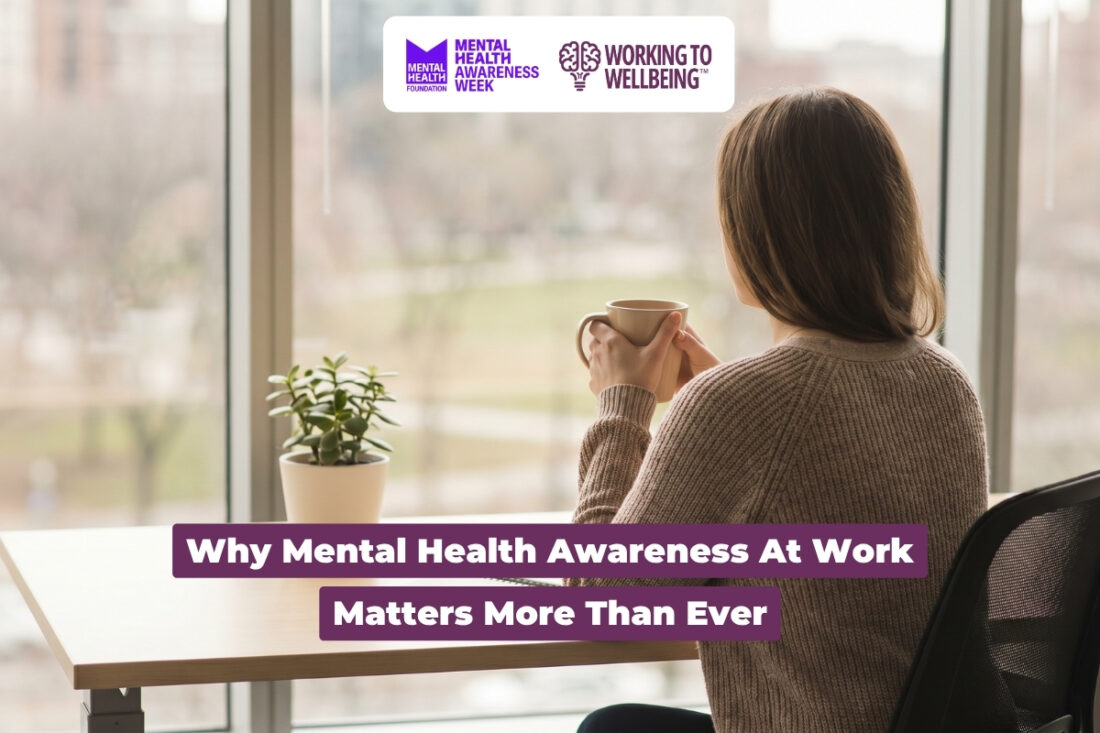
Why Mental Health Awareness At Work Matters More Than Ever | Mental Health Awareness Week 2026
By Alyssa Russo
Mental health isn’t just a personal matter; it’s a workplace issue. We spend a significant chunk of our lives at work – more time, perhaps, than we spend with the people we specifically choose to be around.
It matters. And can therefore play a major part in our general wellbeing.
The scale of the workplace wellbeing challenge is striking. Almost one million workers across Great Britain – 964,000 – reported stress, depression, or anxiety caused or made worse by work in 2024/25, representing a 24% increase on the previous year. That’s not a rounding error: that’s a formidable number of despondent people white-knuckling it through their morning Teams calls.
The economic toll is just as sobering. Deloitte’s latest UK report found that poor mental health costs employers approximately £51 billion per year through absence, presenteeism, and staff turnover. Presenteeism alone accounted for around £24 billion of those costs annually. Presenteeism – the fine British art of showing up to work while poorly and unproductive – remains ridiculously costly for many businesses.
Despite growing awareness, stigma remains a stubborn barrier. 45% of UK employees feel uncomfortable discussing mental health with their manager, fearing negative repercussions – yet 47% believe that open dialogue would significantly improve their wellbeing at work. We all know something needs to change; we’re just all waiting for someone else to go first.
At Working to Wellbeing, we cultivate that dialogue and crack that conversation wide open, deftly bridge the gap between the employer, the employee and any potential obstacles to productivity. Taking a proactive, preventative and proactive approach by building environments that champion open communication and reduce stigma – this is where the real difference is made. This could be as simple as a manager genuinely asking, ‘how are things going for you?’… instead of immediately segueing into quarterly targets.
Here’s the part that should convince the numerically minded among us: research shows an average return of around £5 for every £1 invested in mental health interventions in the workplace. And companies that foster a culture of open communication and mental health awareness see a 20% increase in employee retention rates. Turns out, treating people well is good business practice. Who knew?
Mental health awareness at work isn’t a one-size-fits-all, tick-box exercise. It’s the foundation of a workplace where people can really thrive and maybe even enjoy a Monday. (Occasionally.)