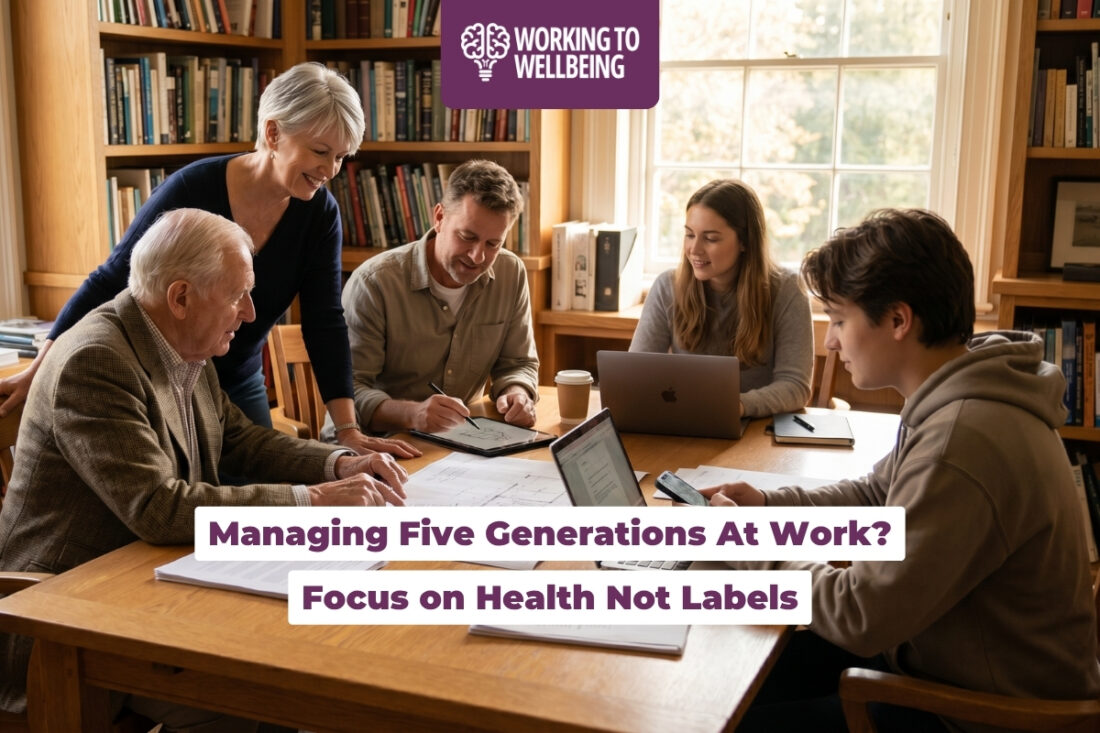
Managing Five Generations at Work? Focus on Health, Not Labels
But this framing risks missing the point.
The real issue is not generational diversity. It is workforce health.
Across all age groups, we are seeing a consistent trend. People are living longer, but not necessarily in good health. Long-term conditions are increasing. Mental ill health is rising. Financial pressure, caregiving responsibilities, and social isolation are affecting people at every stage of their working lives.
The result is a workforce that is more complex, more vulnerable, and more in need of effective support than ever before.
It is tempting to segment the workforce into generational categories and design solutions accordingly. While this may offer some insight, it can also lead to oversimplification. Not every Gen Z employee is digitally confident. Not every Baby Boomer is struggling with physical health. Assumptions, however well intentioned, can obscure what truly matters.
What matters is the individual.
Health is not determined by age alone. It is shaped by a combination of biological, psychological, occupational, and social factors. If we are serious about supporting people to work, we must move beyond labels and adopt a more holistic approach.
This is where a biopsychosocial framework becomes essential. It allows employers to understand not just what condition someone has, but how it affects their ability to function at work, and what support will make a meaningful difference.
Equally important is a shift in mindset. Too many organisations remain focused on managing absence, rather than enabling health. The question should not be how we respond when someone falls out of work, but how we keep them in work in the first place.
Early intervention, good job design, and timely, personalised support are not optional extras. They are fundamental to workforce sustainability.
Vocational rehabilitation has a critical role to play here. It provides a structured, evidence-based approach to helping people remain in, recover in, and return to work. It bridges the gap between healthcare and employment, focusing on capability rather than limitation.
If we continue to focus on generational differences, we risk designing solutions that are neat but ineffective.
If we focus on health, we create workplaces that work for everyone.