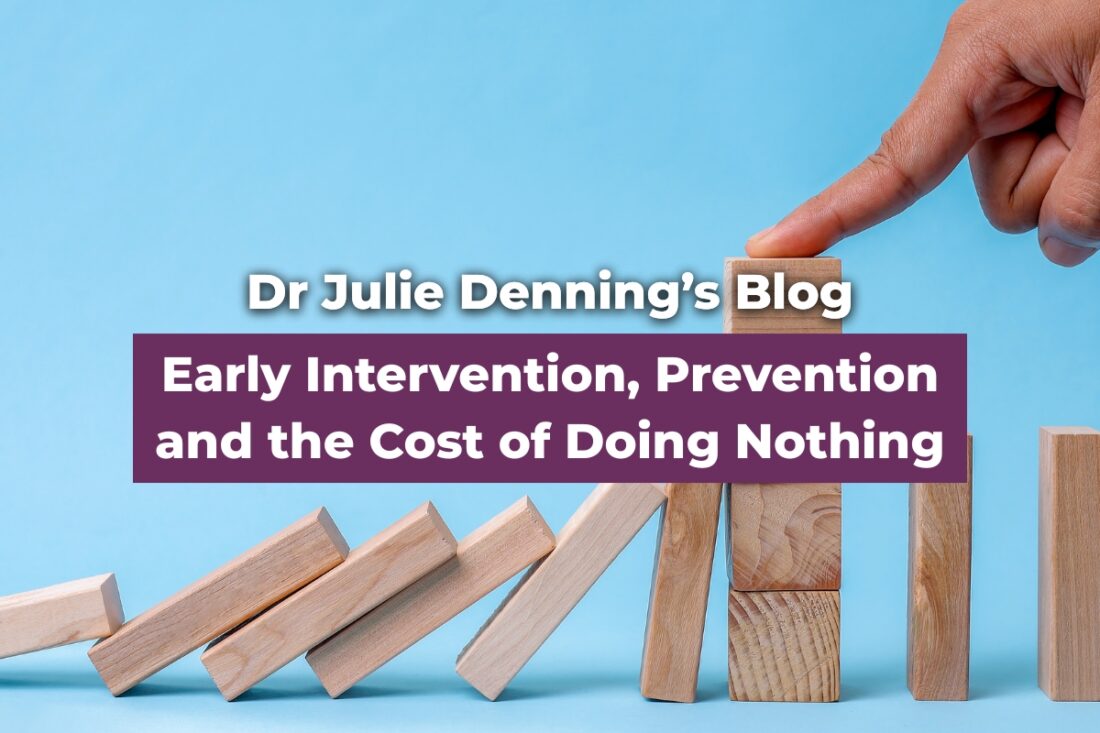
Early Intervention, Prevention, and the Cost of Doing Nothing
Evidence showing that early intervention reduces duration of absence and overall cost
We know there is an abundance of evidence that demonstrates that early intervention reduces duration of staff sickness absence and overall coststo an organization. Why is this the case, well, simply put, unhelpful health behaviours have not had the chance to ‘bed in’, bodies have not yet succumbed to deconditioning and one’s Mind is still in a state of flux, it isn’t yet rigid with automaticity. Get in early and employers and employees will reap the benefits. It truly is a win-win situation.
What prevention looks like in practice across HR and line management
Prevention is frequently discussed in workplace wellbeing, but the term is often used too broadly. There is an important distinction between preventing illness, preventing the development or worsening of a condition through effective monitoring, and preventing someone from falling out of work. These are fundamentally different challenges, each requiring a distinct approach.
In the Keep Britain Working Review, Mayfield highlights two key priorities within the Healthy Working Life Cycle: supporting people to stay in work and enabling a timely return when absence occurs. The evidence is clear, the longer someone is out of work, the less likely they are to return. After six months, the likelihood drops to around 50 percent, and after 12 months it falls significantly to between 3 and 8 percent. This underlines the importance of early, targeted intervention.
Both HR and line managers play a critical role in preventing work loss. HR can create a supportive framework through clear policies that encourage openness and reduce stigma. Line managers are often best placed to identify early signs of difficulty and act promptly. Alongside this, close collaboration between Occupational Health and vocational rehabilitation providers ensures that clinical guidance is effectively translated into practical workplace support, helping individuals remain in or successfully return to work.
The escalating financial and human cost of delayed referrals or passive management
A common misconception is that providing support beyond assessment and recommendations increases costs. In reality, the cost of inaction is far greater. Delayed intervention can lead to rehiring, temporary cover, reduced productivity, lower morale, and loss of critical skills. By comparison, vocational rehabilitation is highly cost effective, with evidence suggesting that for every pound invested, up to twelve pounds can be saved.
The human impact is equally significant. Early intervention supports faster recovery and builds sustainable self management. Without it, health issues can worsen, increasing the likelihood of long term absence and worklessness.
Common organisational barriers that prevent timely action
Many barriers to early intervention stem from well meaning but unhelpful practices. Advice such as waiting until an employee is fully fit, rigid absence policies, or assumptions about capability can all delay support. Fear also plays a role, whether concern about saying the wrong thing or potential legal implications.
These challenges can be addressed through flexible, evidence based policies and equipping line managers with the confidence to act early and appropriately.
How employers can identify early warning signs and intervene appropriately
Line managers are critical to early intervention but are often underprepared. The most effective approach is simple: notice when someone is not themselves, ask questions, and take action early.
Managers are not expected to resolve health issues, but they can make meaningful workplace adjustments. Small, timely changes can prevent absence and often benefit the wider team at minimal cost.
The commercial rationale for embedding proactive systems rather than relying on crisis response
Crisis responses are reactive, often rushed, and can be costly. Embedding proactive systems enables earlier, more effective support, reducing both financial and operational impact.
Organisations that balance proactive planning with the flexibility to respond to change are more resilient. Early intervention sits at the centre of this approach, helping to prevent work loss and support sustainable returns.
Ultimately, early intervention is not only a commercial imperative but a reflection of organisational values. Businesses that prioritise their people create stronger, more sustainable outcomes. Protecting employee health protects the organisation itself.
Working To Wellbeing offer specific Early Intervention pathways as part of our Vocational Rehabilitation Coaching programmes. These programme’s focus on providing tools for people to self-manage their symptoms whilst still at work, enabling them to remain in work and work well. To find out more visit the Early Intervention page or contact us.